A defining feature of an effective CBA is a community-governance structure that places community stakeholders at the heart of oversight.

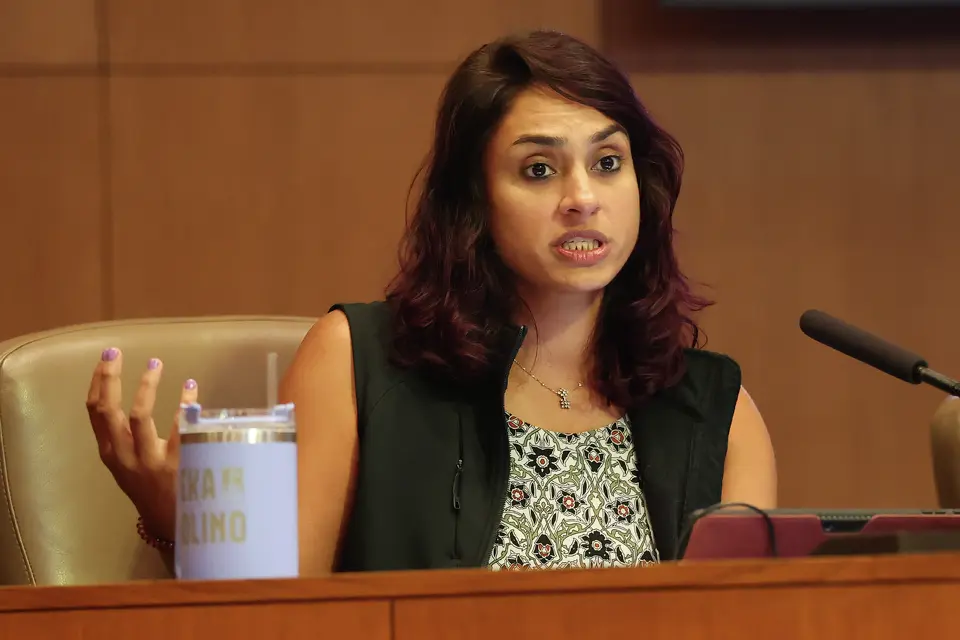
District 1 San Antonio City Council Member Sukh Kaur speaks during a council meeting Wednesday about an economic impact report regarding Project Marvel. Our guest columnists write that Kaur and Council Member Phyllis Viagran voiced support for including a task force of diverse stakeholders as part of the community benefits agreement for the proposed Spurs arena.
Marvin Pfeiffer/San Antonio Express-News


The city of San Antonio’s proposed sports and entertainment district — funded, in part, by county venue taxes and city hotel occupancy taxes — has sparked excitement and skepticism in our community.
While we share the community’s desire to keep the Spurs rooted in our community, we also share concerns about the use of public dollars in ways that once again risk divesting from San Antonio’s East Side.
Even on the West Side, where generational disinvestment and displacement are already pressing concerns, the ripple effects of a major development like the proposed sports district are palpable.
Rising property values and speculative development often follow large-scale projects — even those located miles away. Without thoughtful, proactive planning, West Wide residents and businesses risk being priced out of their neighborhoods.
These impacts are predictable, but they are also preventable if community voice is at the center of public discourse.
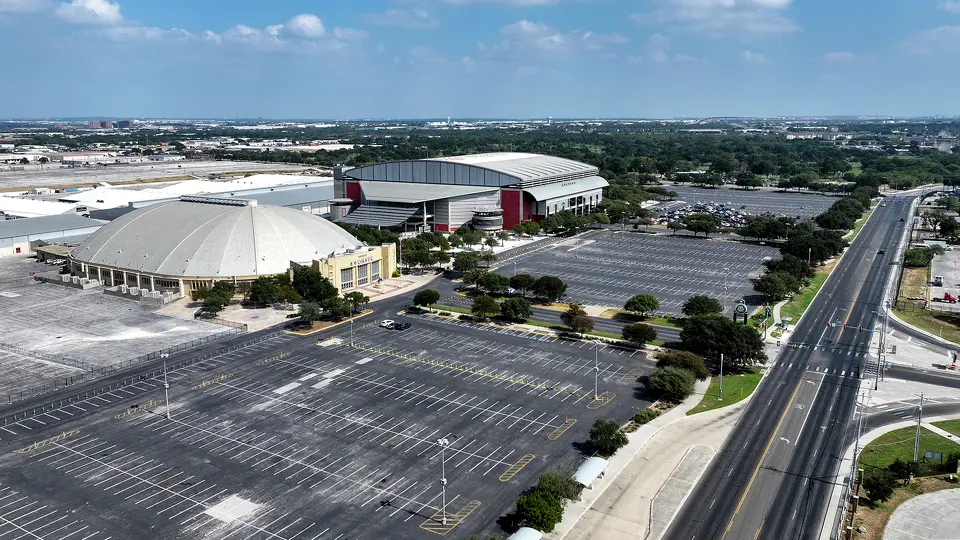
Many East Side residents vividly recall the promises made during the 1999 campaign for a new tax to fund what is now named Frost Bank Center. That arena was billed as a catalyst for economic development on the East Side.
However, with game day traffic funneling fans into the Frost Bank Center and then out to Interstate 10 or Interstate 35, the promised investment and economic opportunity for the East Side has largely failed to materialize.
While many on the East Side continue to feel ignored, residents citywide are questioning whether their voices are being heard and whether their input is meaningfully shaping significant decisions around the unintended consequences related to the sports and entertainment district. Concerns such as housing displacement, small-business support, traffic congestion and prolonged disruptions from construction are just a few of the issues that need robust discourse led by community voices.
The county venue and city hotel occupancy taxes under consideration are public funds. They should be used to uplift local residents and small businesses, not displace them — particularly in the neighborhoods that will be most directly affected by the sports district.
As leaders of place-based economic development nonprofits serving San Antonio’s urban core, we know this: When the public’s dollars subsidize sports arenas, the public deserves to share in the benefits, not just the bill.
Think of it like this: When you use a credit card, you expect reward points or cash back — not just the charges. Community benefits are the public’s cash back, ensuring residents see tangible returns when their public dollars help fund large developments.
Across the country, community benefits agreements, or CBAs, have emerged as powerful tools to deliver tangible and lasting value to people who live and work nearby.
CBAs are legally enforceable agreements negotiated between developers and community coalitions that clearly define measurable benefits for local communities, such as local hiring commitments, small-business opportunities, affordable housing provisions and infrastructure improvements.
A defining feature of an effective CBA is a community-governance structure that places community stakeholders at the heart of oversight, ensuring transparency, accountability and public trust.
We have seen this model succeed elsewhere:
- In Detroit, the Little Caesars Arena CBA included provisions for local hiring, affordable housing and neighborhood improvements, with a neighborhood advisory committee consisting of local residents overseeing compliance.
- In Buffalo, the Bills stadium received nearly $850 million in public funding. A community benefits oversight committee, which included representatives from local community groups, monitored compliance and guided the distribution of community investments.
- In Los Angeles, an advisory committee was included in the Staples Center CBA to track progress and enforce compliance, which included local hiring, affordable housing funding and public park improvements.
These models can — and should — inform how San Antonio approaches the sports and entertainment district.

District 3 San Antonio City Council Member Phyllis Viagran speaks during a council meeting Wednesday about an economic impact report regarding Project Marvel. Our guest columnists write that Viagran and Council Member Sukh Kaur voiced support for including a task force of diverse stakeholders as part of the community benefits agreement for the proposed Spurs arena.
Marvin Pfeiffer/San Antonio Express-News
At the Aug. 6 City Council session, Council Members Sukh Kaur and Phyllis Viagran voiced support for including a task force of diverse stakeholders as part of the community benefits agreement. However, this task force needs to be clearly defined, granted meaningful oversight of the promised community benefits, and formally included in the deal’s term sheet ahead of the City Council’s anticipated Aug. 21 vote to place this issue before the voters in November.
A community-governance model that places community stakeholders at the center of decision-making and implementation can build public trust while ensuring that development aligns with community needs.
As the community conversation regarding the proposed district and related community benefits continues, we urge elected officials and the Spurs organization to commit to a robust, citizen-driven CBA that explicitly guarantees residents have a meaningful seat at the table to oversee the benefits promised and ensure that public investment leads to shared prosperity.
Even if the specific benefits of the CBA — affordable housing, early childhood education or small-business support — are deferred to a later date, a process that prioritizes community oversight must be secured now.
Regardless of what the voters decide in November, SAGE and Prosper West stand ready to convene stakeholders, share best practices, and work alongside our public officials to build transparent and effective processes for equitable development. Our community deserves nothing less.
James Nortey is CEO of San Antonio for Growth on the Eastside. Ryan Kuhl is CEO and president of Prosper West. Their organizations promote equitable economic development in San Antonio’s urban core.