San Antonio seeks to reconnect East Side and downtown, breach barrier of I-37

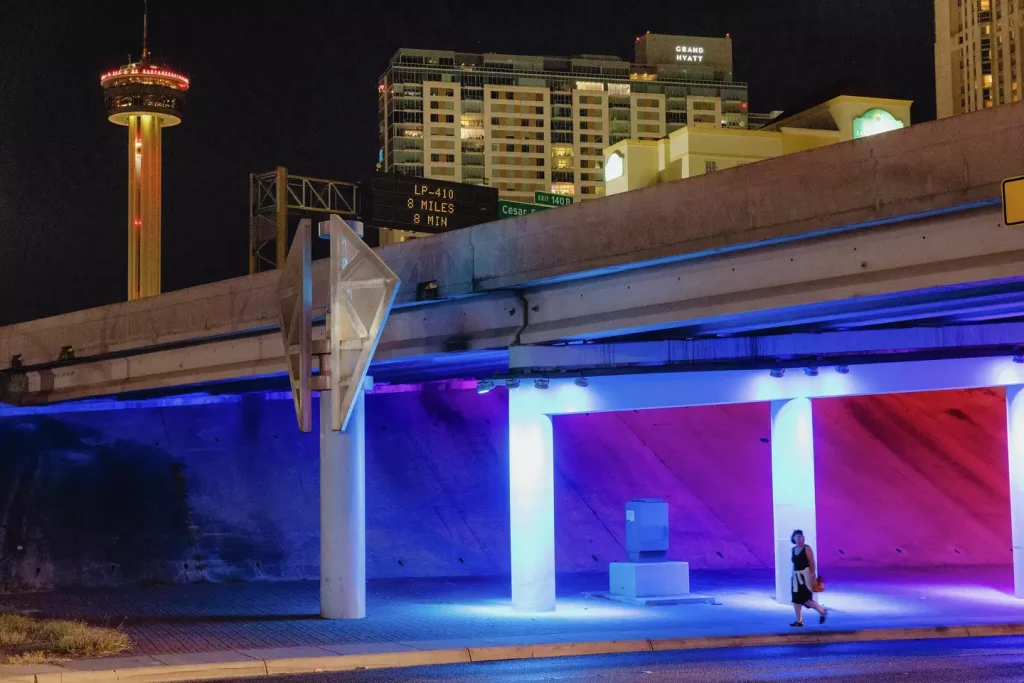
A lone pedestrian walks under the Interstate 37 overpass to the near East Side of San Antonio from downtown.
Christopher Lee Staff Photographer
When Interstate 37 ripped through downtown San Antonio in the 1960s, it effectively walled off the East Side from the center city and displaced hundreds of residents.
The same kind of neighborhood-breaking upheaval was playing out across the country as urban planners lobbied for federal highways to be built through their cities — instead of skirting them — to ease local traffic congestion.
But cities around the country are now looking to restore communities cleaved by highways, with assistance from the federal government. The U.S. Department of Transportation is handing out billions for projects to repair some of the damage. These include building connecting structures over or under a highway, making walking and biking near an interstate easier and safer, and creating green space in the vicinity.
In Austin, a 10-mile stretch of Interstate 35 will be lowered in order to build land bridges above it to reconnect the city’s East Side to its downtown and add 30 acres of public space. The multi-phase project will cost several billion dollars, with construction slated to begin late next year.
The city of San Antonio is considering a similar project, albeit on a much smaller scale. Officials are looking to reconnect the East Side to the urban core, and they’ve landed a $2.96 million federal grant to kick-start the effort.
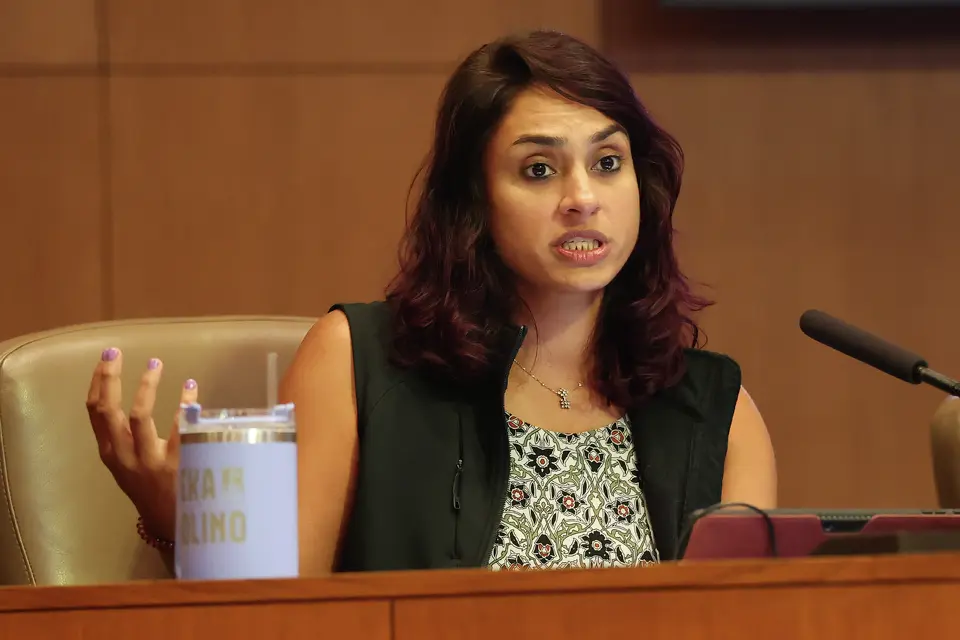
Assistant City Manager Lori Houston, who oversees the city’s downtown operations, said officials have long wanted to make it easier for East Side residents to access the center city.

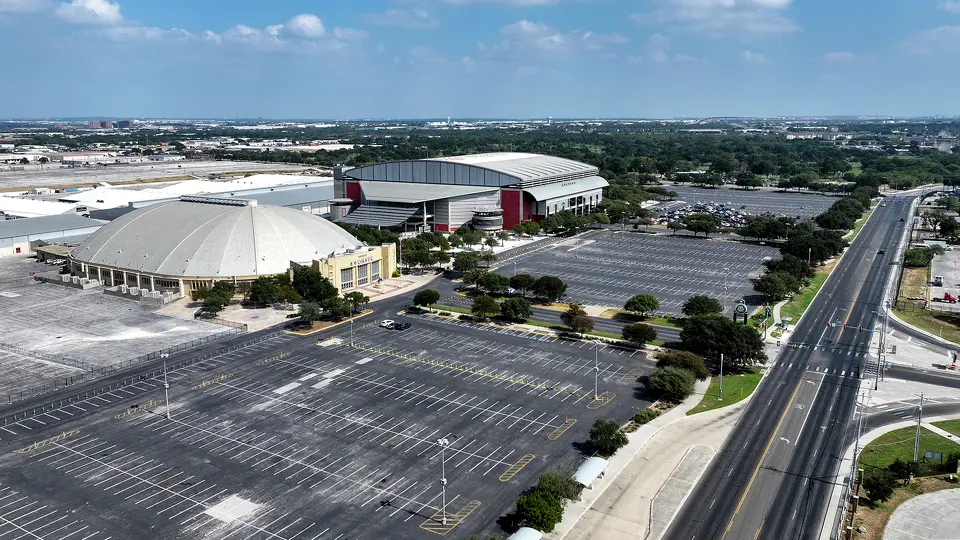
A view of the Alamodome from the Hays Street Bridge on Wednesday, Oct. 23, 2024, in San Antonio, Texas.
Christopher Lee Staff Photographer


The behemoth
The construction of I-37 and the HemisFair ’68 World’s Fair site in the 1960s displaced between 1,600 and 2,238 residents, according to the city’s grant application to the U.S. Department of Transportation. The first downtown section of I-37 was completed in 1967.
“I-37 is a behemoth, visually, physically, and economically dividing residential neighborhoods from opportunities and resources Downtown,” city officials said in the application. “The immediate Eastside is largely industrial and has limited economic activity compared to the higher-paying jobs Downtown in retail and hospitality.”
The application highlights the shortcomings of difficult-to-cross pedestrian underpasses connecting the East Side to downtown, calling them “visually oppressive and uncomfortable, characterized by bustling vehicular intersections, wide roadways, high traffic volumes and speeds, and poor lighting.”
The lack of decent and safe underpass crossings, the city said in its application, makes it difficult for people to bike, walk and take buses from the East Side to downtown.

People walk beneath the Interstate 37 overpass that connects the near East Side and downtown San Antonio.
Christopher Lee / Staff Photogra/Christopher Lee Staff Photographer
The East Side was one of many communities across the country that were hurt by redlining in the mid-20th Century, when banks, backed by the federal government, often refused to make home loans in largely Black or Hispanic neighborhoods.
The lack of mortgage lending and investment capital on the East Side sent neighborhoods into decline, which in turn made some the them vulnerable when highway planners began plotting the path of I-37.
Reconnecting the East Side to downtown, the city argued in its grant application, could help right those historic wrongs.
One possible means of reconnecting the two areas: a land bridge over I-37.
Land bridges (also called caps, decks or lids) stretch over highways to make it easier for people to cross from one side to the other, and are carpeted with grasses and plants. San Antonio is already home to one such structure — the $23 million Robert L.B. Tobin Land Bridge over Wurzbach Parkway on the North Side. The land bridge, which opened in 2020, connects the two sides of Hardberger Park.
The grant dollars will allow the city to gather public input and hire a consultant to develop reconnection plans.
City officials plan to apply for additional federal grant dollars for construction, and would likely have to chip in 20% to 50% in local matching funds.
The reconnection effort will be carried out on I-37 somewhere between East Houston Street to Carolina Street, just south of downtown. The exact location of a land bridge or other connector projects will be ironed out in the next year.
Houston said the city could improve existing walkways under the interstate or build a land bridge that arches over part of I-37, depending on consultant and community feedback.
But the more expensive alternative of burying the highway — and building a boulevard or green space over it — is off the table.


Chris Lee
Chris Lee
RELATED: ‘Project Marvel’: City’s downtown plans are much bigger than a Spurs arena. So is likely price tag.
Benefit for ‘Project Marvel’?
The Transportation Department grant could also benefit a sport and entertainment district that city officials are planning — so far with no public participation. The project, which could cost several billion dollars, would include an upgraded Alamodome, an expanded Henry B. González Convention Center and potentially a new Spurs arena at Hemisfair and a second Convention Center hotel. The district is known by its city code name, Project Marvel.
A land bridge appears to part of the ongoing conversations about Project Marvel.
In July 2023, Houston emailed locally based Pape-Dawson Engineers about providing several services for the potential sports and entertainment district, including studying the feasibility of a land bridge. The emails, obtained by the San Antonio Express-News through open records request, didn’t indicate where on I-37 the structure could be built.
Pape-Dawson hasn’t started working on the tasks Houston outlined in that July 2023 email, Houston said. And now that the city has grant funding to hire a consultant who will look into reconnecting the East Side to downtown, Houston said she likely will strip the land bridge feasibility study from Pape-Dawson’s to-do list and give it to the incoming consultant.
But Houston said the city would seek to reconnect Hemisfair and downtown to the near East Side with or without Project Marvel.
“If there’s going to be a sports and entertainment district, that needs to incorporate this initiative in its plan because that would definitely change the look and feel of the district,” she said. “But we’re not doing this for the sports and entertainment district.”
“It’s about connecting the community,” she said.
Information about Project Marvel has been scarce in part because the city has required outside parties who are helping plan the district — including developers, real estate firms and consultants — to sign nondisclosure agreements to keep the effort under wraps. The Express-News learned of the emerging plan through emails between Houston and other officials obtained under the Texas Public Information Act.
The status of the effort could become public soon, though. Houston said staffers will brief City Council on Project Marvel by the end of this year.


Chris Lee
Chris Lee
Granted
San Antonio’s grant is coming from Department of Transportation’s Reconnecting Communities and Neighborhoods program, which provides planning and construction grants to cap or remove highways, add new transit routes and build sidewalks, bridges and bike lanes.
San Antonio’s pitch was one of 132 proposals across 41 states and the District of Columbia to receive funding from the program, which handed out a total of $3.33 billion in grants.
San Antonio put up $740,000 in matching funds for its nearly $3 million grant.
Houston said reconnecting the East Side to downtown could take a decade to complete, assuming the city is able to secure additional federal funding to make it happen.

People walk under Interstate 37 overpass that connects the near East Side of San Antonio and downtown.
Christopher Lee Staff Photographer
Chance to ‘dream big’
The city will tap neighborhood associations, chambers of commerce, Hemisfair Park Area Redevelopment Corp. and other groups for ideas for how to improve the East Side’s ties to downtown, Houston said.
San Antonio for Growth on the Eastside, an economic development nonprofit, will be one of those participants.
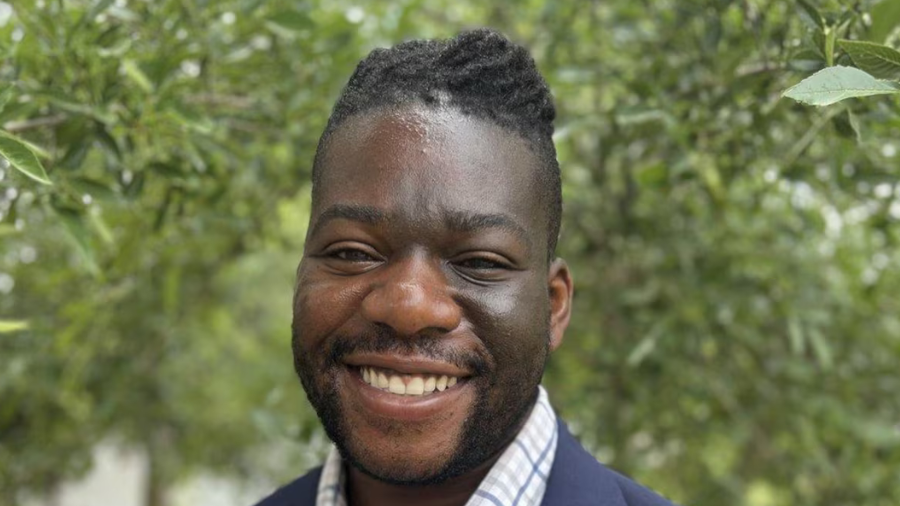
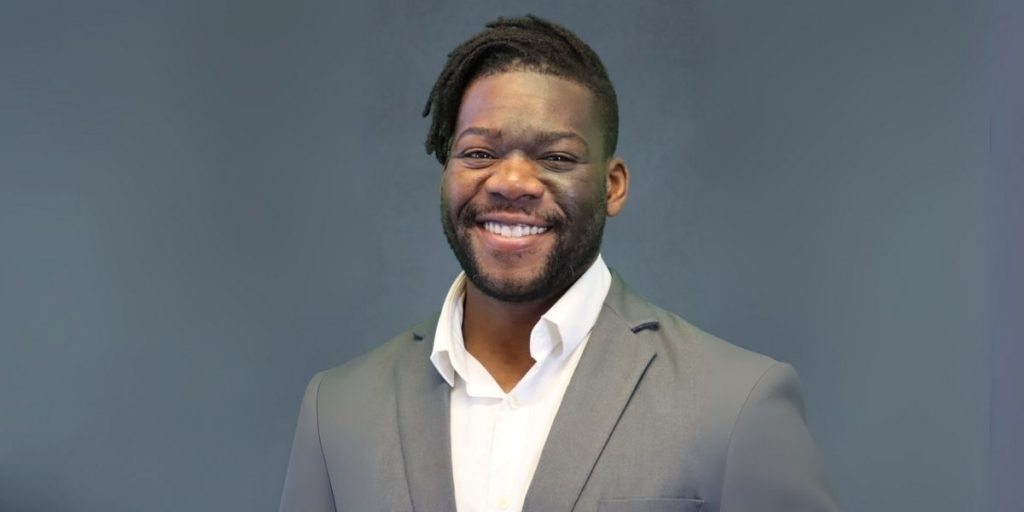
“We have an opportunity here to dream big,” SAGE chief executive James Nortey said.
Nortey wants East Side residents to lead conversations on what could be most helpful in their everyday lives. He could see burying part of the freeway or building land bridges as potential solutions to challenges faced on the East Side.
Improving access to the East Side and increasing biking, walking and public transit opportunities could have public health benefits and boost area businesses, Nortey said.
But he said the study must also consider potential problems, such as gentrification, that could stem from increased accessibility. He’s concerned that if the East Side is easier to reach from downtown, house flippers and eager home buyers will snap the community’s less expensive housing stock and push out long-time residents.
“It could have yet another unintended consequence,” Nortey said. “Just like how I-37 was designed to connect people and connect commerce, there was an unintended consequence of cutting off the East Side.”



Megan Rodriguez covers City Hall for the San Antonio Express-News. She can be reached at megan.rodriguez@express-news.net.