VIA, city, nonprofits unsure if federal grant money is still coming
The Trump administration’s DEI policy change has created uncertainty on some of the funding, but local officials say they remain optimistic.
By Richard Webner, Reporter
March 23, 2025

Christopher Lee / Staff Photogra
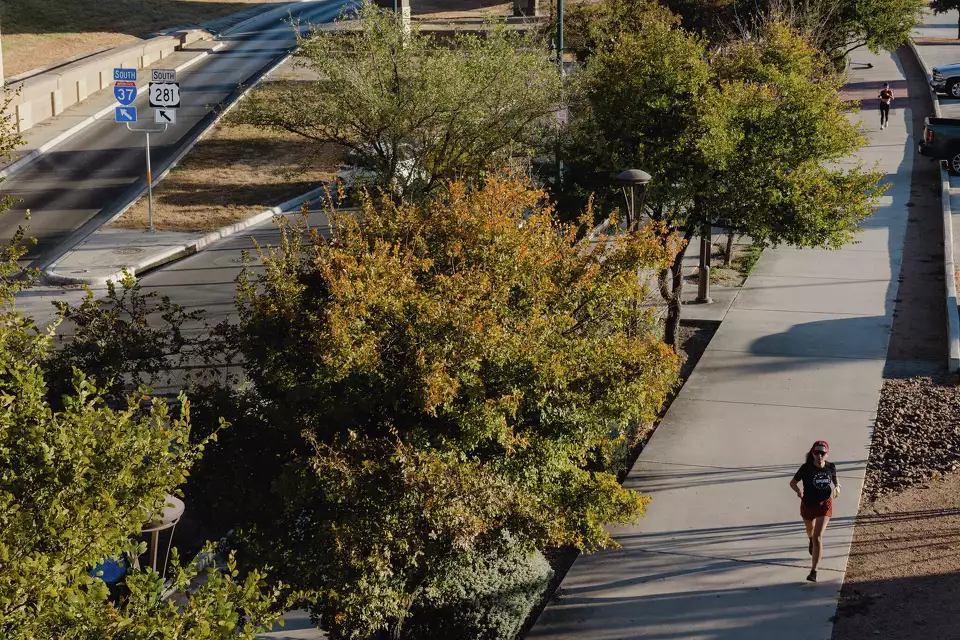
The city of San Antonio and the nonprofit San Antonio for Growth on the Eastside are uncertain whether they will be able to keep the federal grants they were awarded last year to study how to bridge the barrier formed by Interstate 37 between the East Side and downtown.
The city of San Antonio and the nonprofit San Antonio for Growth on the Eastside are uncertain whether they will be able to keep the federal grants they were awarded last year to study how to bridge the barrier formed by Interstate 37 between the East Side and downtown.
The city of San Antonio and the nonprofit San Antonio for Growth on the Eastside are uncertain whether they will be able to keep the federal grants they were awarded last year to study how to bridge the barrier formed by Interstate 37 between the East Side and downtown.
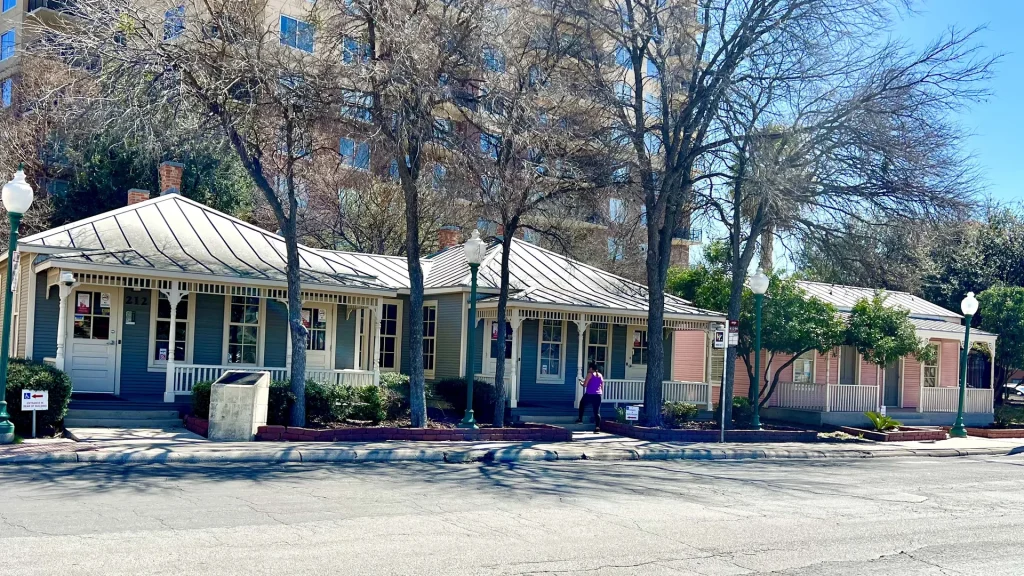
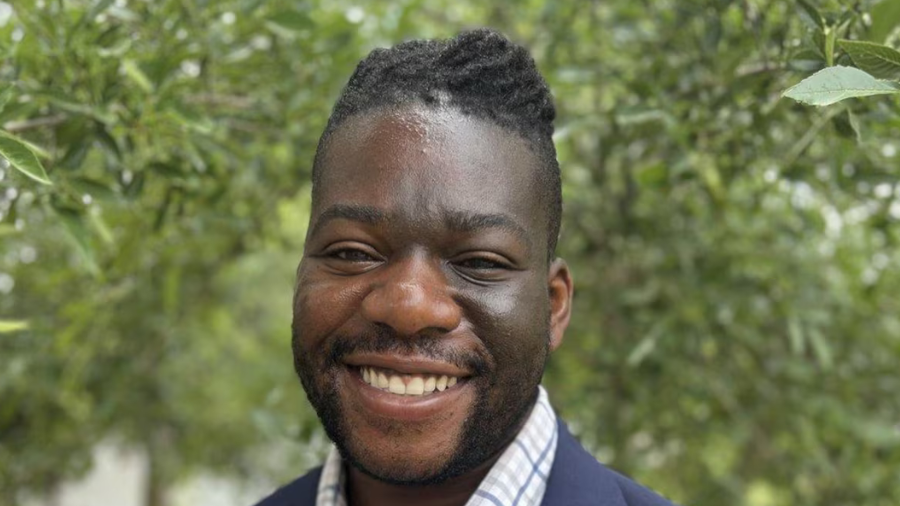
On Jan. 10, James Nortey was happy to receive a letter from the U.S. Department of Transportation informing him that the nonprofit he leads, San Antonio for Growth on the Eastside, or SAGE, had landed a $2 million grant to study how to better connect the East Side with San Antonio’s urban fabric, by burying stretches of surrounding highways or building land bridges over them.
On Jan. 16, he received an email inviting him to join a Zoom webinar at the end of the month so transportation department officials could teach him about the resources available and answer questions.
A week later — three days after the inauguration of President Donald Trump — another email arrived, telling him the webinar had been postponed.
Nearly two months after that, it still hasn’t happened, Nortey said. His organization — along with leaders from the city of San Antonio and VIA Metropolitan Transit — is unsure whether they will still be receiving the federal grant money, as the Trump administration targets spending that it perceives to be in alignment with the social justice ideology of the political left often referred to as diversity, equity and inclusion, or DEI.
SAGE’s grant came from a government initiative known as the Reconnecting Communities Pilot Program, which sprang out of the 2021 Infrastructure Investment and Jobs Act, commonly known as the Bipartisan Infrastructure Law. The initiative now has an uncertain future after Trump has issued executive orders seeking to block funding to DEI programs.
Last year, the city of San Antonio won a $2.96 million grant from the Reconnecting Communities program for use in studying how to overcome the barrier which Interstate 37 forms between the East Side and downtown, possibly by bridging it over, as has been done in Dallas and other cities. SAGE’s grant has a similar purpose but its scope includes Interstate 35 just east of downtown and two stretches of Interstate 10.
The city hasn’t received any formal communication from the Department of Transportation about the grant, but has been told by agency staff that “all pending grants are under review,” city spokesperson Luke Simons said in a written statement. The city is continuing the process of selecting a consultant and hopes to present a recommendation to the San Antonio City Council in May, he said — if it gets the green light from the federal government.
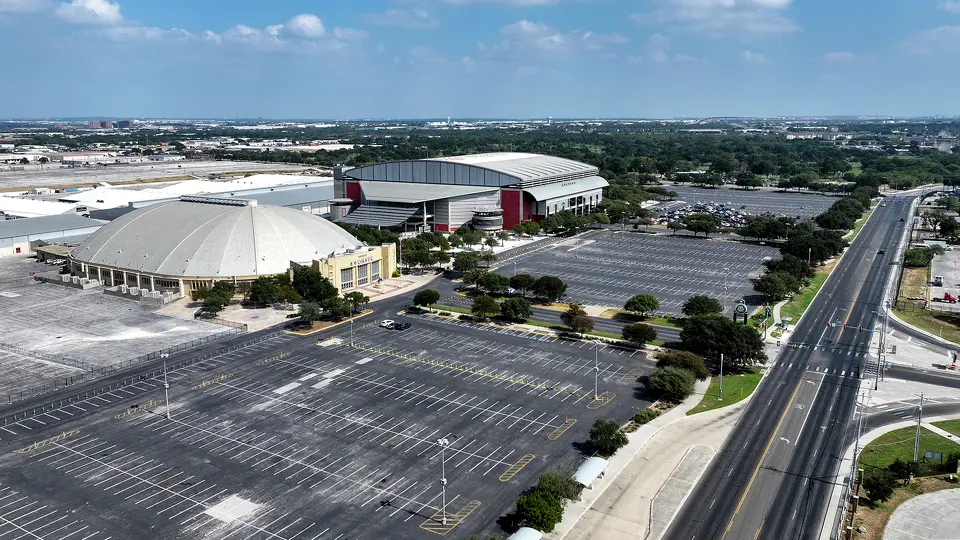
The city’s plans for a multibillion-dollar downtown sports and entertainment district, focused around a new Spurs arena, could include a land bridge over Interstate 37.
“The city will continue to approach federal grants as it always has — strategically,” Simons said in the statement.
Uncertainty for VIA grants
In 2023, the Department of Transportation selected VIA, the local transit agency, to receive technical assistance through another initiative birthed under the Bipartisan Infrastructure Law. Known as the Thriving Communities Program, the initiative was intended to help “under-resourced communities to better access federal funds” offered under that law, according to a news release from VIA that year.
That assistance now appears to be on hold, VIA officials said at a board meeting this week, describing what they had learned in meeting with Trump administration officials during an annual lobbying trip to Washington D.C. arranged by the Greater San Antonio Chamber. The trip, dubbed SA to DC, occurred March 3-6.
VIA said it is also unsure about the status of a $760,000 federal grant to establish a pilot transit-oriented development — in other words, a housing or commercial development designed to offer convenient access to nearby transit routes — officials said at Tuesday’s board meeting.
Thomas Marks, VIA’s vice president of government affairs and community engagement, told the board that based on what was learned during the Washington trip, the agency expected a “permanent pause” on the Reconnecting Communities and Thriving Communities programs because they fall under Trump’s DEI executive order.
Nortey, the CEO of SAGE, said he is hopeful that Reconnecting Communities — and his nonprofit’s grant — will survive, though he says he has not had substantive communication with the transportation department since January.
Usually, federal agencies offer help to grant recipients through a technical assistance hotline, he said. For his Reconnecting Communities grant, that hotline has been silent, though he continues to communicate with federal staff for a separate grant which the nonprofit won last year through the U.S. Department of Health and Human Services. He has been been exchanging emails with Health and Human Services staff and expects to have a video meeting with them on Monday, he said.
To explain his optimism, Nortey pointed to a temporary restraining order a federal judge issued on Jan. 31 blocking Trump’s funding freeze.
SAGE hasn’t yet received anything from the grant, he said. He wouldn’t expect to draw funds until next month anyway, when he plans to begin requesting proposals from consultants to work with the nonprofit on the project. He said he is hoping that the court system will clarify the situation by then.
“As of right now, we are proceeding, but to be perfectly candid, I am aware that at any given time, we could run the risk that anything could change,” he said. “We have to move forward as quickly as we can. If I had my way, I would draw down all the funds and move forward as quickly as possible.”
Funding for rapid bus line
Marks and other VIA officials also made a presentation recently in a meeting of City Council’s Transportation and Infrastructure Committee. At the meeting, several council members expressed concern that federal funding could fall through for VIA’s current undertaking, a citywide system of rapid bus corridors with a total cost expected to be upwards of $730 million. Under current plans, the system would mostly be funded with federal dollars.
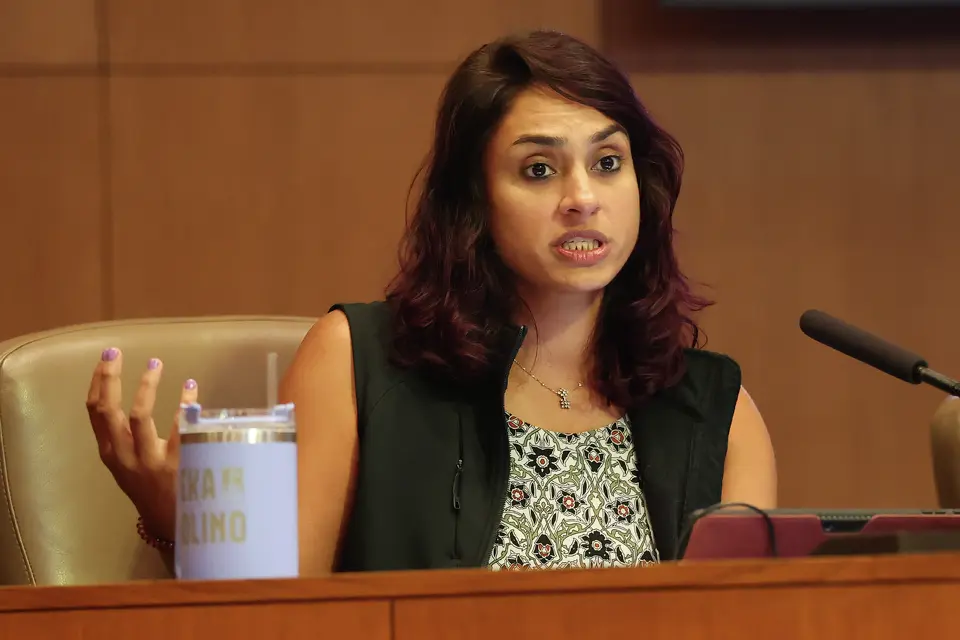
“I feel like we’re all kind of on unsure footing,” Councilwoman Melissa Cabello Havrda said at the meeting. “I just feel like all bets are off.”
In the largest capital project of its 47-year history, VIA plans to build rapid bus corridors: the Green Line, running north-south from near the vacant Lone Star Brewery to San Antonio International Airport; and the east-west Silver Line, running from the crossing of Loop 410 and East Houston Street to the area near Joint Base San Antonio-Lackland.
In December, VIA secured a crucial $268 million grant for the Green Line from the Federal Transit Administration, and it has already begun drawing funds, agency officials said. Last year, Bexar County committed to providing $100 million for the Silver Line, but the agency hasn’t yet received a required $146.7 million federal match.
VIA officials said they were encouraged after their visit to Washington that Silver Line funding wasn’t under threat.
Marks described the project as falling neatly into the Trump administration’s priorities for transportation spending, as outlined by U.S. Secretary of Transportation Sean Duffy in a recent order. The administration will prioritize projects in communities with “marriage and birth rates higher than the national average” and that pass through Opportunity Zones, a federal tax break created during the first Trump administration with the intent of encouraging development in neglected areas.
Marks described the project as falling neatly into the Trump administration’s priorities for transportation spending, as outlined by U.S. Secretary of Transportation Sean Duffy in a recent order. The administration will prioritize projects in communities with “marriage and birth rates higher than the national average” and that pass through Opportunity Zones, a federal tax break created during the first Trump administration with the intent of encouraging development in neglected areas.
Bexar County includes 24 Opportunity Zones, Marks said at the board meeting.
“We actually check the box on all three priorities that the DOT put out in Secretary Duffy’s memo,” he said. With the Silver Line’s local funding lined up, “we feel very strong.”
In his order, Duffy also said that recipients of federal Department of Transportation funding should be prohibited from imposing vaccine and mask mandates and should be required to cooperate with federal immigration enforcement “and with other goals and objectives specified by the p;resident of the United States or the secretary.”
VIA plans to begin a conversation soon with the Federal Transit Administration on “what kind of federal match we could be looking at” for the Silver Line, Leroy Alloway, chief of staff to Jon Gary Herrera, VIA’s president and CEO, told the Express-News.
At their board meeting, VIA officials showed slides illustrating that federal funding for transportation projects hasn’t changed drastically between Democratic and Republican presidential administrations in recent decades.
“We just came back from DC, where we heard from the FTA that the president has informed Secretary Duffy, ‘Hey, go build!’” Marks said.
The agency’s focus will be on grants that “don’t fall into (Trump’s) executive orders,” he said.
March 23, 2025
Richard Webner
Reporter
Richard Webner has returned to the Express-News to cover the San Antonio region’s transportation issues. During his first stint, he worked on the business desk, covering the retail and tourism sectors, real estate and downtown development. He earned a graduate degree in journalism from the University of Missouri and an undergraduate degree in history from Northwestern University.
Source: https://www.expressnews.com/news/article/trump-dei-federal-grants-via-san-antonio-20230575.php